Offer Ends In
00
:
00
:
00
:
00
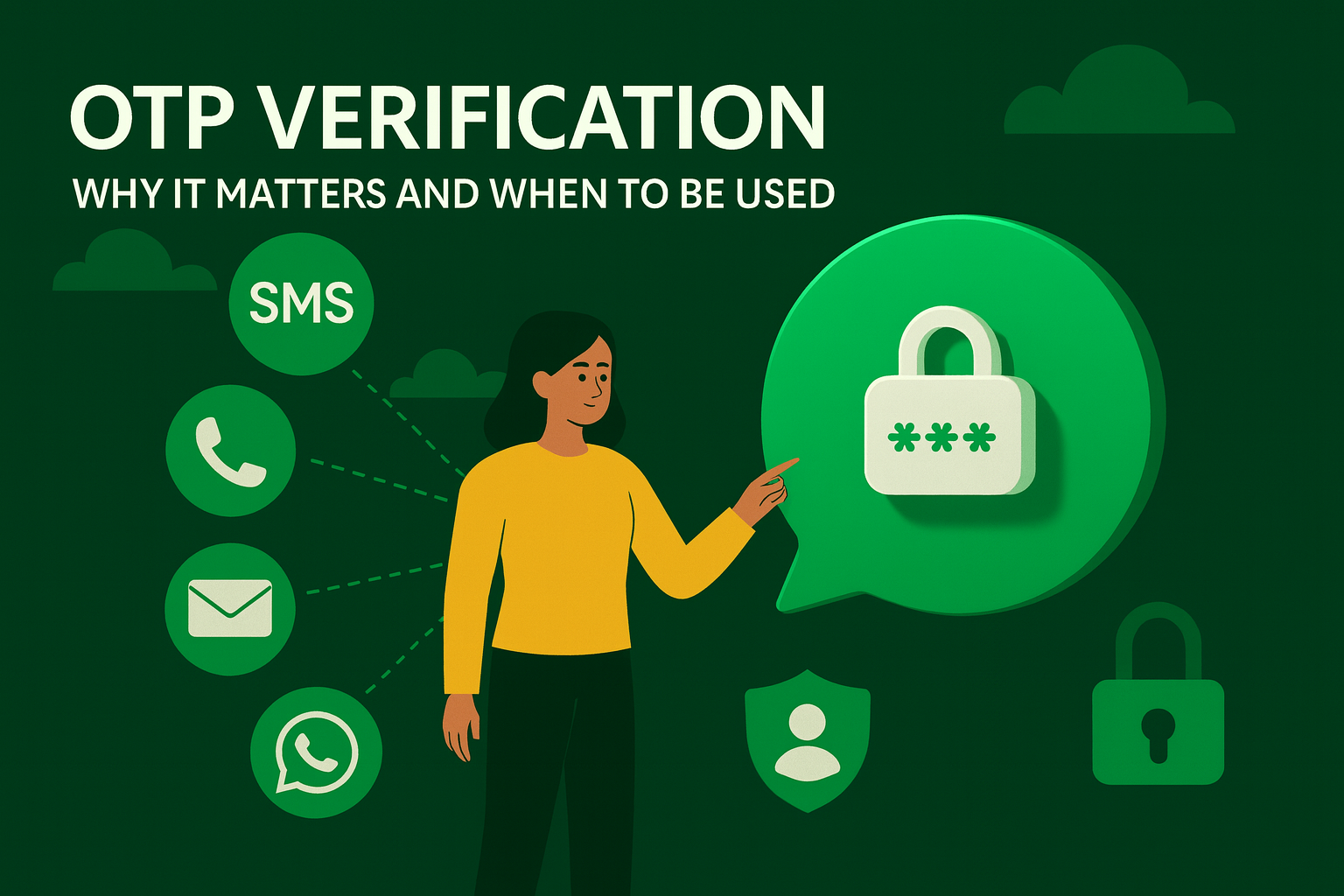
Data breaches and online fraud are increasingly common, and One-Time Password (OTP) verification has become an essential concept in online security. It’s the extra layer of protection that ensures user accounts are not accessed by someone else, whether logging into an account, completing a transaction, or recovering a password.
OTP authentication, or One-Time Password authentication, involves sending users a temporary, unique code to confirm their identity and prevent unauthorized access by hackers or other people with malicious intents. Because these codes are valid for only one session or a brief amount of time, they prevent attackers from reusing stolen credentials like passwords.
This makes OTP verification one of the simplest yet most effective tools for strengthening security in apps, websites, financial platforms, and government systems.
Beyond basic login protection, OTP plays a key role in two-factor authentication (2FA), combining something the user knows (a password) with something they receive (the OTP). It also supports passwordless authentication and helps businesses comply with KYC (Know Your Customer) and KYB (Know Your Business) regulations through timestamped verification logs.
One-Time Password (OTP) verification can be delivered through several channels, each offering distinct advantages in terms of speed, reliability and user experience. Choosing the right method depends on the nature of the transaction or protected account, the target audience, and the level of security required. These are the different available channels for sending OTPs:
Each method has its own strengths, and many organizations combine multiple channels to provide both reliability and user choice. A multi-channel OTP strategy not only strengthens security but also enhances user trust by ensuring codes are always accessible.
OTP verification is used across industries to build trust and protect users. It plays an essential role in:
Authentica’s developer-friendly API enables OTP verification with no development effort, and with the easiest possible integration and a pay-as-you-go model to pay only on-demand. This allows you to comply with standards, get to the market faster and reduce initial costs drastically.
OTP verification remains one of the most reliable methods for protecting user identities and securing online transactions. The growing demand for multi-channel, scalable, and regulation-compliant solutions make it an essential method of verification. By adopting flexible and well-integrated OTP systems, organizations can strengthen trust, reduce fraud, and deliver safer digital experiences, and all of this can be used without any effort with a readily developed API like the one provided by Authentica.