
Offer Ends In
00
:
00
:
00
:
00
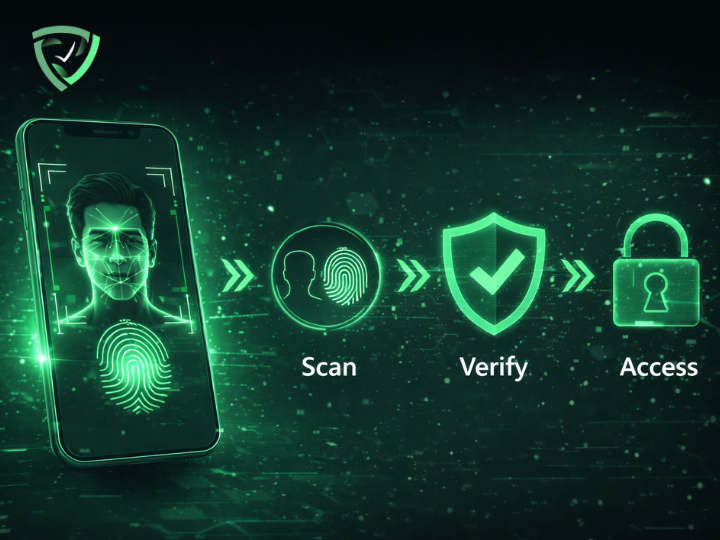
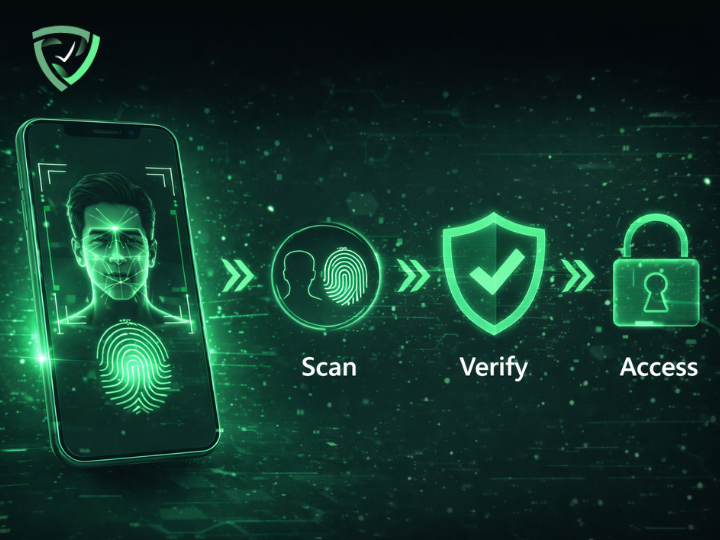
Protecting identities, user and enterprise sensitive information is becoming more complicated than ever, especially with the ongoing AI boom. Traditional password-based verification methods, while more familiar and seem to be an easier option for many users, have been proven to be vulnerable to many attacks and errors.
Biometric authentication offers an alternative to passwords and more vulnerable authentication methods, as users verify identity through unique traits rather than something users have to remember or carry that can be stolen.
In this blog, we will explore what biometric authentication is, how it works, the main types of biometric authentication, and when to use them.
Biometric authentication is a security process that confirms a person’s identity by analyzing their unique biological traits like fingerprints, facial features or voice. These characteristics are captured and stored and compared to the user input each time they authenticate.
Unlike passwords or tokens that can be stolen or forgotten, biometric identification is unique to each person and nearly impossible to replicate accurately. This makes biometric authentication both highly secure and convenient and this is why it is now widely used in verifying online transactions, unlocking smartphones and even granting physical access to highly secured facilities.
Biometric authentication comes in many forms, each with its unique advantages and suitable applications. Understanding these types helps organizations choose the right mix of authentication methods to use, depending on their industry and user needs and preferences.
Fingerprint authentication analyzes the unique fingerprint patterns on a fingertip using optical, capacitive, or ultrasonic sensors. It is one of the most common and cost-effective biometric authentication methods, widely used in smartphones to authenticate apps and unlock the phone itself, in addition to access control and attendance management systems.
With facial recognition, the user face is mapped and key facial features are analyzed, such as the distance between eyes or the contour of the jawline, to create a mathematical representation of a face that is stored and later compared while logging in.
It offers quick, contactless verification and is commonly used for smartphone security, airport check-ins, and corporate access systems.
These methods analyze the unique patterns in a person’s eyes, more specifically the iris or the retina. Both are highly accurate and ideal for environments that demand top-level security, such as border control and government systems.
Voice authentication identifies a user by analyzing vocal characteristics such as pitch, tone and cadence. It’s particularly effective and widely used for phone banking, virtual assistants, and call center verification.
This category includes gait recognition (how a person walks), typing rhythm, and even mouse movement patterns in some advanced applications. It enables continuous authentication, monitoring users passively while they interact with systems to detect anomalies or unauthorized access.
Vein recognition is another biometric authentication method that uses infrared light to map the unique pattern of veins in a person’s hand or fingers. Similarly, hand geometry measures finger length and palm structure. Both methods are mostly suited to secure facility access and can be used in other healthcare applications.
Biometric authentication is increasingly adopted across industries because it provides a strong balance of security, efficiency and user convenience, which are the main factors that define which authentication methods are used to secure devices, facilities or user accounts. These are the biggest benefits of using biometric authentication instead of other traditional authentication methods:
Biometric traits are unique and difficult to counterfeit, making them highly resistant to attacks such as phishing or credential theft. The reliance on biological features rather than knowledge-based credentials significantly reduces the risk of unauthorized access, which is one of the biggest and most clear benefits.
With biometric authentication, users no longer need to remember or reset complex passwords every time they open one of their accounts. A fingerprint scan or facial recognition takes seconds, enabling fast authentication with unmatched convenience compared to any other type of authentication.
While initial setup costs for biometric authentication methods, especially advanced ones like face recognition, can be higher than traditional systems, biometric authentication reduces ongoing expenses tied to password management, recovery and the amount of support provided. Over time, this translates into substantial savings for organizations.
For industries governed by strict regulations, such as finance or healthcare, biometric authentication helps meet compliance standards like Know Your Customer (KYC), Anti-Money Laundering (AML), and different data protection laws by ensuring strong, verifiable identity checks that are in many cases obligatory.
Although biometric authentication can be applied broadly, its adoption can be more beneficial for specific industries, where it adds the most value. Here is where biometric authentication shines most:
Sectors such as defense and government benefit from the heightened security biometrics offer, minimizing risks associated with credential-based breaches that can’t be afforded.
Hospitals can use biometric authentication methods like fingerprint and iris recognition to ensure accurate patient identification and protect confidential health records.
Banks and fintech platforms adopt biometric authentication for seamless, secure verification in mobile banking, transaction confirmation and call centers.
Airports and immigration systems use facial recognition and iris scanning to speed up passenger processing while maintaining security integrity.
Mobile apps now use biometric authentication widely for unlocking apps, authorizing purchases and orders and protecting personal accounts.
Implementing biometric authentication from scratch can be complex, requiring deep expertise in security, user experience and system integration. Authentica simplifies all of this with a readily developed biometric authentication API, bringing facial recognition, fingerprint matching and voice verification. Developers can easily access this API on platforms like **[RapidAPI]**, and an **[n8n node]** is available for integration into automation workflows, without building them internally and wasting money and resources. You can get in touch with our team to learn more.
Biometric authentication represents a major step forward in the evolution of digital authentication for devices and accounts. It combines security, convenience and speed in a way that traditional methods cannot match. From securing financial transactions to enhancing healthcare systems and mobile experiences, biometrics are redefining online security, especially with the ability to integrate it widely with tools like Authentica.



